Klarna CEO: SaaS Is Dead, AI Agents Will Replace It
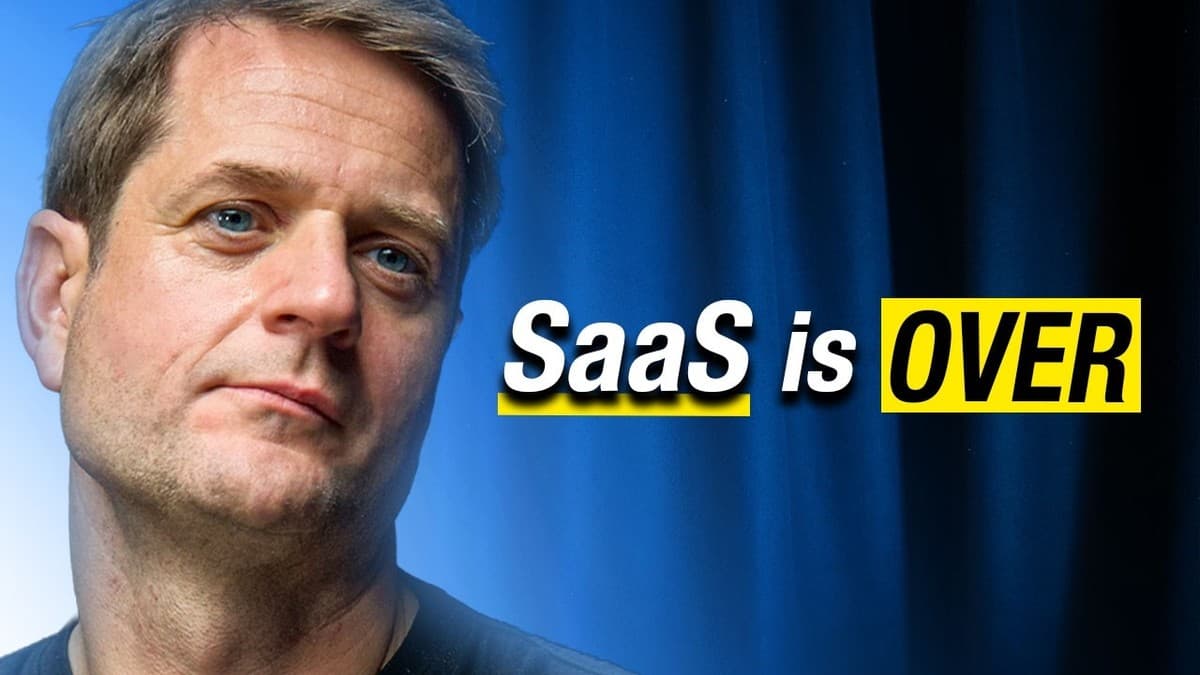
Key insights
- Klarna has shrunk from 7,000 to under 3,000 employees — a 50% reduction — with no additional investment, mostly through natural attrition
- When AI agents reduce the switching cost of data between systems, SaaS companies lose their most important competitive advantage: lock-in
- Sebastian prefers Claude over ChatGPT because Claude gives honest, unfiltered answers instead of trying to please the user
- AI is fundamentally a compression technology — all human knowledge can be compressed to a few hundred gigabytes because most of it is repetitions and variations
Read this article in norsk
In Brief
Sebastian Siemiatkowski, CEO of Klarna, sits down with Harry Stebbings for a wide-ranging interview about AI and the future of business. The message is clear: the cost of creating Software as a Service (SaaS) is going to zero, AI agents will soon eliminate the switching costs that keep companies locked into Salesforce and SAP, and Klarna is proving it works — they've halved their headcount from 7,000 to under 3,000 without asking for a single extra dime. Sebastian also shares why he prefers Claude, what he learned from Michael Moritz at Sequoia, and why AI is fundamentally a compression technology.
SaaS is dead — what does that actually mean?
Sebastian opens the interview with a broad claim: the cost of creating software is going to zero (1:32). Everyone will be able to generate software at any point in time. But that's not the full picture.
The real threat to SaaS companies like Salesforce, SAP, and ServiceNow comes when the switching cost of data disappears. Today, companies are stuck because all their data is locked inside the vendor's system, in their data model, according to their setup. You might be able to build a new dashboard with AI, but moving all the data? That's been nearly impossible (2:17).
The stock market has already reacted
Sebastian points out that the stock market started waking up to this reality in the weeks before the interview. SaaS companies that historically traded at 20–30x revenue are now down to 5–10x. But normal utility companies trade at 1–2x. Do SaaS companies still have room to fall? Sebastian thinks yes (3:32).
He uses Chegg as an example, a US education company now trading at 0.2x revenue after ChatGPT "ate" their core business. He doesn't think it'll get that extreme for the big SaaS players, but 1–2x is absolutely possible.
"Company in a box" — Sebastian's own experiment
The same weekend that Claude Code gained traction on X, Sebastian was sitting and playing with a project he called "company in a box" (6:36). The idea: put open source (freely available, community-built) accounting software and a Customer Relationship Management system (CRM) in one workspace, place a Claude agent on top, and ask "can you bookkeep this invoice for me?"
It worked surprisingly well. For small companies, this could replace the entire accounting firm. You ask Claude instead of emailing the accountant.
But not everyone should code their own
Sebastian is clear that not every company should build their own software. The plumbing firm isn't going to "vibe code" (use AI to generate software by describing what you want in plain language) their systems. They'll buy an off-the-shelf product — a "company in a box" (7:43). But for large companies like Klarna? They need to build internally because the AI needs the best possible context to do a good job.
Why Klarna builds everything in-house
Klarna started shutting down SaaS subscriptions two years ago. The reason is simple: AI needs context to do a good job, and context is scattered across many different systems (8:22).
A bit of data in the CRM, a bit in the project management tool, a bit in the accounting system, a bit in Slack. If the AI is going to answer customer queries correctly, it needs access to everything, ideally directly in the source code (the actual programming instructions that make the software work).
Sebastian gives a concrete example: "How does Klarna calculate interest?" The answer lives deep in the source code. A customer service agent might have documentation, but documentation can be inaccurate. The truth is in the code (12:26). This is what "AI native" means in practice: the entire tech stack is reimagined with AI as the foundation, combining deterministic code (traditional programming) with probabilistic code (AI) into one system that functions as the bank's operating system.
Customer service: From 700 AI agents to human VIP
In 2023, Sebastian announced that Klarna's AI customer service had done the equivalent work of 700 human agents. The headlines went viral, generating both admiration and anger (10:51).
But the truth was more nuanced. At that time, the AI was answering simple questions: "Did I pay Klarna?" "Yes, you did." Not exactly rocket science.
The pivot
Instead of just cutting costs, Sebastian flipped the mindset: AI customer service will be the cheap version everyone gets. But human contact becomes the new luxury (15:41). Just as handcrafted furniture became more valued when factories started mass-producing, personal service will become the VIP experience of the future. This mirrors the pattern emerging in AI-driven education, where AI handles the repetitive instruction while human mentors focus on motivation and support.
Klarna's Uber model for customer service
Klarna now recruits its most passionate customers as customer service agents (17:29). People living in rural areas who want to work part-time or earn extra. They log on (just like an Uber driver) and help other customers. Customer satisfaction? "Through the roof."
From 7,000 to under 3,000 employees
The numbers are hard to ignore. Klarna had over 7,000 employees. Now they're under 3,000, a reduction of over 50% (34:00).
What stands out: Sebastian didn't ask the board for a single dime in additional investment to launch a suite of new banking services (peer-to-peer payments where users send money directly to each other, stock trading, international remittances, increased card balances and deposits). On the contrary, he could launch all of this because AI makes the organization more efficient.
How it works in practice
- Mostly natural attrition: People stay about 5 years and move on. Klarna barely hires new people
- Employees share the gains: Compensation per head has increased nearly 50% during the period
- 2030 target: Sebastian hints it could be fewer than 2,000 employees
AI as compression technology
Sebastian also presents a theory about AI as compression technology (1:00:29). He describes a conference in Yellowstone with Sam Altman and Eric Schmidt, where someone from the audience asked: "How is it possible that an entire AI model, trained on the entire internet, fits on a USB stick?"
Sebastian's answer: because AI compresses information. In a typical company, the same information is stored over and over again: in Slack, Salesforce, Google Docs, presentations. But on Wikipedia? There's only one article about Klarna. Not fifteen.
What this means for data centers
If enterprise data can be compressed dramatically, we might need far less compute than people think. Sebastian had a conversation with Michael Burry (yes, The Big Short guy) about precisely this (1:03:29).
The counterargument: people will also generate new content, like a personalized Star Wars movie with your own face. That requires enormous computing power. The question is which force wins: the compression of enterprise data or the generation of new content for entertainment.
Claude vs. ChatGPT — Sebastian's honest assessment
Harry asks whether Sebastian would invest in Anthropic (Claude) or OpenAI (ChatGPT). Sebastian's preference is clear (55:26):
OpenAI is becoming a consumer company. ChatGPT optimizes for emotional connection: people use it as a friend, entertainment, counselor. The risk: they start optimizing to please the user.
Claude (Anthropic) is "my intelligent advisor." Sebastian says he actively pushes Anthropic: "I don't want an AI that tells me how awesome I am. I want one that says: Sebastian, that's absolutely stupid. Don't do that." (56:57)
Cursor vs. Claude Code
Sebastian also uses both coding tools. He describes them as having "almost distinct personalities" — he jumps between Cursor (an AI-powered code editor) and Claude Code depending on the task (54:41). Harry predicts that Cursor will lose half its revenue in 2026 because of Claude Code. Sebastian is more optimistic about Cursor's future.
The CEO who codes
Sebastian describes how AI has turned him into a builder. He recounts an experience with Claude that stood out: he tried to communicate a complex financial concept, and after a few iterations with Claude, he got a working animation in HTML (1:09:13).
To create the same thing before, he would have needed an animator, a designer, an accountant, and a financial analyst, and none of them would have understood what the others needed to make it perfect. Claude had all the skills in one.
Klarna's path: From "buy now, pay later" to global bank
Beneath the surface, this interview is equally about Klarna's transformation from a payment solution to a full-scale digital bank. Sebastian shares the vision from 2015: Klarna will become your digital financial assistant — one that wakes you up in the morning and says "I checked your mortgage, you're overpaying like hell, and I've already renegotiated for you" (21:08).
Competitive advantages
- 110 million customers globally (twice as many as Revolut)
- Own payment network like American Express — they don't just know that you shopped at Sephora, but which products you bought
- US card growing rapidly — 2–3 million active cardholders in just a few months
BNPL is not a "shitty business"
Harry challenges Sebastian directly: isn't BNPL (buy now, pay later) simply a bad business? Sebastian answers honestly: yes, it's hard to build a $20–30 billion company on pure consumer lending. But Klarna has developed a model that's better than credit cards: no revolving debt (where unpaid balances pile up with interest month after month), interest-free installments, and debit as the default (50:07).
Quick fire: What VCs should be doing
Harry asks about investing in AI, and Sebastian is direct: if you as an investor haven't downloaded Cursor or Claude Code and tried to build something yourself, you lack the competence to evaluate AI companies (53:54). It's that critical to understand how powerful these tools are today.
Glossary
| Term | Definition |
|---|---|
| SaaS (Software as a Service) | Software you rent instead of buy — like Salesforce, Slack, or Google Workspace. You pay monthly, and the software runs in the cloud. Sebastian's argument is that this model is threatened because AI makes it cheap to build equivalent solutions yourself. |
| ERP (Enterprise Resource Planning) | Large systems like SAP or Oracle that handle everything from accounting to inventory management in a company. They're expensive, complex, and hard to replace — exactly the type of system AI agents could threaten. |
| Switching Cost | The cost and effort required to switch from one system to another. For SaaS companies, this has been the most important lock-in mechanism: even if the product is bad, it's too expensive and time-consuming to move all the data. |
| AI Agent | An AI that doesn't just answer questions but can perform actions — read files, click in programs, move data between systems. Think of it as a digital employee that can carry out tasks independently. |
| Vibe Coding | Using AI to generate software by describing what you want in plain language, instead of writing code manually. Tools like Cursor, Claude Code, and Lovable make this possible. |
| BNPL (Buy Now, Pay Later) | A payment model where you shop now and pay in interest-free installments later. Klarna's core product, and their entry point to building a full banking relationship with customers. |
| AI Compression | Sebastian's theory that AI functions as a compression technology — it takes enormous amounts of repetitive information and distills it down to its essence. That's why a model trained on the entire internet can fit on a USB stick. |
| Price-to-Sales (P/S) | A metric showing how much investors pay per dollar of revenue. SaaS companies have historically traded at 20–30x revenue. Sebastian believes they could fall to 1–2x — the level of normal companies. |
Sources and resources
Want to go deeper? Watch the full video on YouTube →